

Heads up: some links in this post are affiliate links, so we may earn a small commission at no extra cost to you. Read our Affiliate Disclosure.
The hardest part of cold weather isn’t owning the right clothes. It’s looking at the forecast, seeing 38°F, and having no idea whether that means a light jacket or your heaviest coat. This guide makes that decision simple. Find the temperature, choose an outfit for your plans, then make one easy swap if it’s raining or windy.
There are 17 complete outfits here, from crisp 50-degree days to bitter days below 20°F. For more ideas by occasion, browse our 25 winter outfits for women.
Images in this post are AI-generated style inspiration.

FREE OUTFIT FINDER
What should I wear today?
Pick your age, the temperature and your occasion, and see 4 outfit ideas instantly, from 20°F to 80°F.
Try the Outfit FinderCold weather outfits at a glance
| Temperature | Layers | Coat | Shoes | Add |
|---|---|---|---|---|
| 50–59°F (10–15°C) | 1–2 light layers | Trench, shacket or light jacket | Loafers, flats, sneakers | Light scarf, optional |
| 40–49°F (4–9°C) | 2 layers | Quilted jacket or lined coat | Sneakers, ankle boots | Scarf |
| 30–39°F (−1 to 4°C) | 2–3 layers | Warm wool or shearling-collar coat | Lug boots, tall boots | Hat, scarf, gloves |
| 20–29°F (−7 to −2°C) | 3 layers, with a thermal base | Insulated or down coat | Insulated waterproof boots | Hat, gloves, warm socks |
| Below 20°F (below −7°C) | 3+ layers | Long windproof down parka | Insulated snow boots | Mittens, neck gaiter, warm hat |
These are starting points, not rules. Use them with the three questions below.
Why the temperature isn’t the whole story
The same 40°F can feel completely different from one day to the next. Before you get dressed, ask yourself:
- Is it wet? Rain and damp clothes make you feel colder. Choose a waterproof outer layer and shoes that keep your feet dry.
- Is it windy? Wind cuts through loose knits. A tightly woven coat or windproof shell and a high collar help more than an extra sweater.
- How long will you be outside? A five-minute walk from the car needs far less than a 30-minute walk, a commute by train, or an outdoor event.
Also think about how active you’ll be and how easily you feel the cold. If you walk fast or tend to run warm, you may be comfortable with one layer less. If you’re standing still or often feel chilly, add one.
50–59°F (10–15°C): Crisp and changeable
What it feels like: cool in the shade, pleasant in the sun, and often warmer by afternoon.
The formula: a light top, a removable light layer, full-length pants or a midi skirt, and closed shoes.
1. Trench coat, striped tee and straight jeans
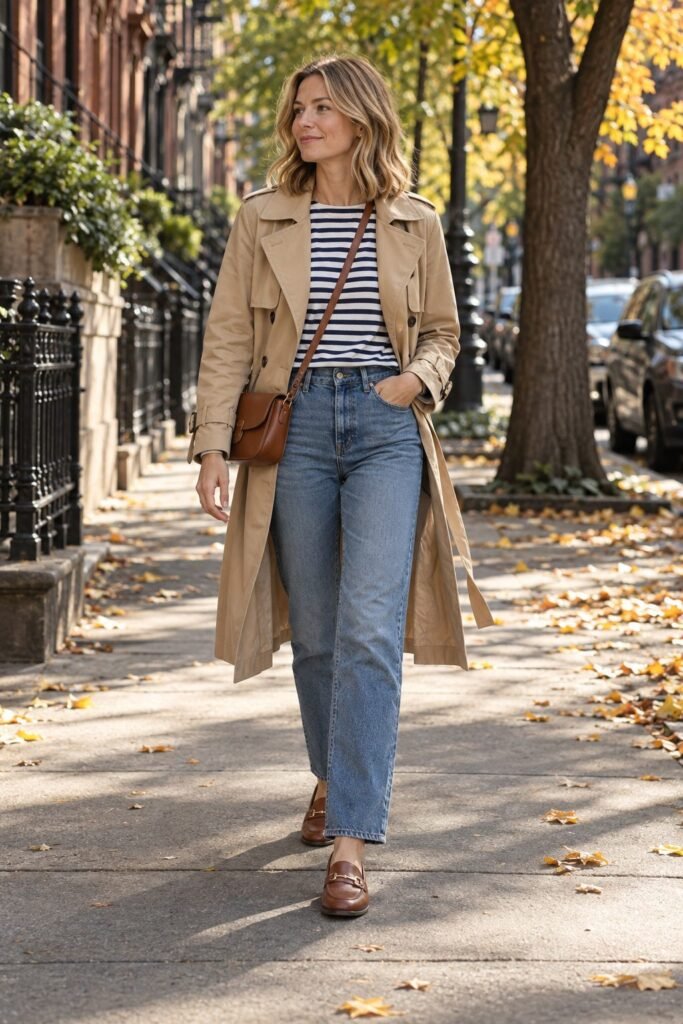
Why it works: A trench blocks a light breeze and comes off easily when the sun comes out.
Wear it with: a striped long-sleeve tee, mid-wash straight jeans, tan loafers and a small crossbody bag. Wear it for: errands, coffee or a weekend walk.
If it’s wet: Swap the loafers for water-resistant ankle boots.
2. Wool shacket, silk blouse and ankle trousers

Why it works: A shacket looks more polished than a jacket, and it’s easy to wear at your desk if the office runs cool.
Wear it with: a cream silk blouse, black ankle trousers, low pointed heels and a structured tote. Wear it for: the office or a client lunch.
If it’s windy: Close the shacket and add a light scarf.
3. Tweed jacket, fine knit and midi skirt

Why it works: Tweed adds texture and just enough warmth for a short walk to dinner without needing a coat.
Wear it with: a fine black knit top, a black A-line midi skirt, slingback heels and a small chain bag. Wear it for: dinner, drinks or an evening event.
If it’s wet: Choose a closed-toe heel and bring a compact umbrella.
40–49°F (4–9°C): Time for a real jacket
What it feels like: clearly cold in the morning and after dark, with little warmth in the shade.
The formula: a warm base, a jacket or lined coat, closed shoes, and a scarf in your bag.
4. Quilted jacket, waffle henley and wide-leg jeans

Why it works: A quilted jacket adds warmth without bulk, and the textured henley keeps the outfit from feeling plain.
Wear it with: an oatmeal waffle-knit henley, dark wide-leg jeans, suede sneakers and a canvas tote. Wear it for: a market, school drop-off or a casual lunch.
If it’s wet: Swap suede for leather sneakers or rain boots.
5. Lined belted coat, knit and pleated midi skirt
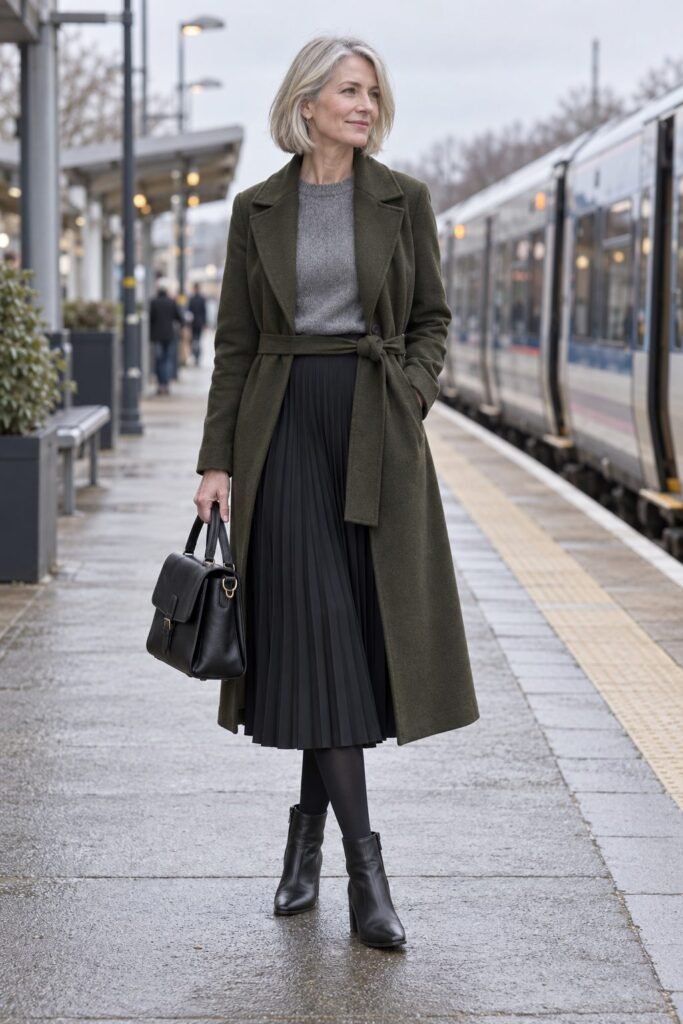
Why it works: A lined coat handles a chilly commute, while opaque tights make a midi skirt comfortable at this temperature.
Wear it with: a gray fine-knit sweater, a black pleated midi skirt, opaque tights, block-heel ankle boots and a leather satchel. Wear it for: the commute and the office.
If it’s windy: Belt the coat closed and add a wool scarf.
6. Wool wrap coat, ribbed knit maxi skirt and heeled boots

Why it works: A long skirt and a wrap coat look elegant and cover your legs better than a shorter hem.
Wear it with: a fitted black knit top, a ribbed maxi skirt, heeled ankle boots and gold earrings. Wear it for: a dinner reservation or a date.
If it’s wet: Choose a shorter hem so your skirt stays out of puddles.
30–39°F (−1 to 4°C): Cold, and close to freezing
What it feels like: properly cold, especially with wind. Rain can turn icy near the bottom of this range.
The formula: a thin warm base, a sweater or thermal layer, a warm coat, closed boots, and a hat or gloves.
7. Shearling-collar aviator, thermal henley and lug boots
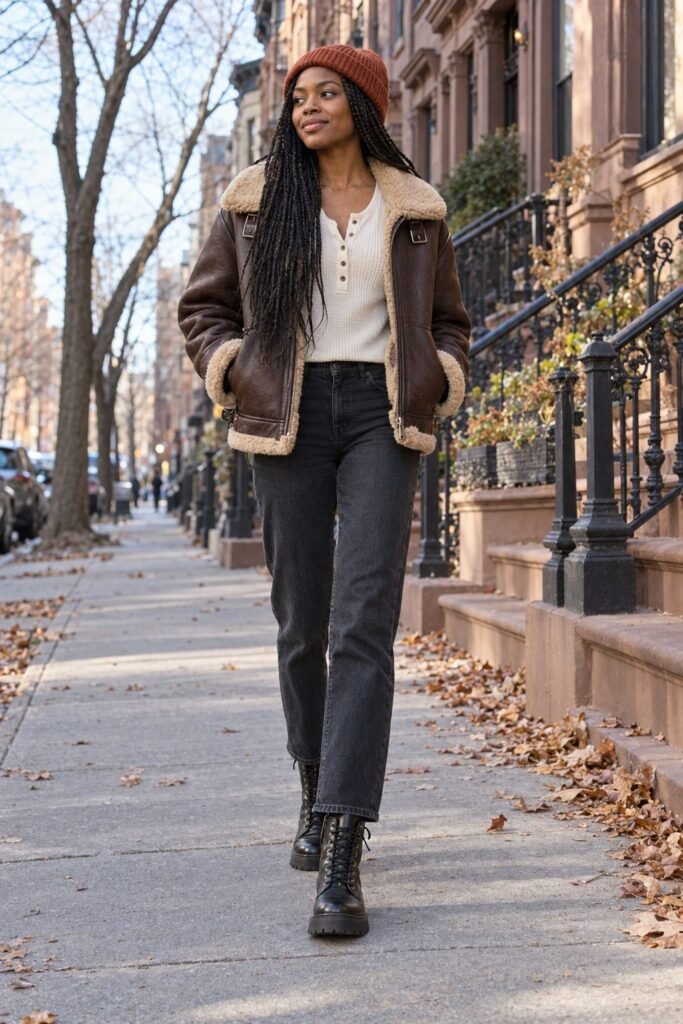
Why it works: A shearling collar keeps your neck warm, and lug soles help on damp sidewalks.
Wear it with: an ivory thermal henley, straight dark jeans, lace-up lug boots and a knit beanie. Wear it for: weekend plans and walking around the city.
If it’s windy: Zip the jacket up to the collar and add gloves.
8. Herringbone coat, merino turtleneck and wool trousers
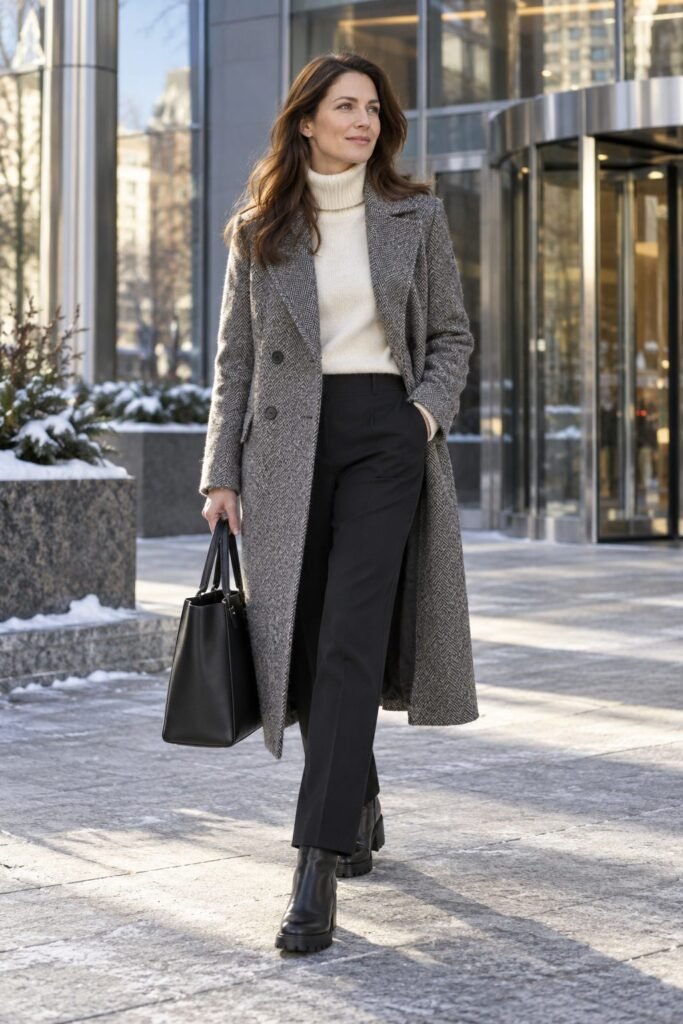
Why it works: Wool trousers are warmer than most lightweight office pants, and merino adds warmth without bulk.
Wear it with: a cream merino turtleneck, black wool trousers, heeled lug boots and a laptop tote. Wear it for: the office and client meetings.
If it’s wet: Choose boots with a rubber sole and a coat that can handle a light shower.
9. Long wool coat, velvet dress and knee-high boots

Why it works: Knee-high boots meet the hem of a midi dress, so very little of your leg is exposed between the car and the door.
Wear it with: an emerald velvet midi dress, black tights, knee-high boots and a gray wool scarf. Wear it for: the theater, holiday dinners or a dressy evening.
If it’s wet: Save velvet for dry evenings, and wear a wool dress instead.
20–29°F (−7 to −2°C): Freezing
What it feels like: cold within minutes, especially on your face, hands and ears. Sidewalks may be icy.
The formula: a thermal base, a warm middle layer, an insulated coat, waterproof boots, and a hat and gloves.
10. Hooded down parka, thermal top and fleece-lined jeans
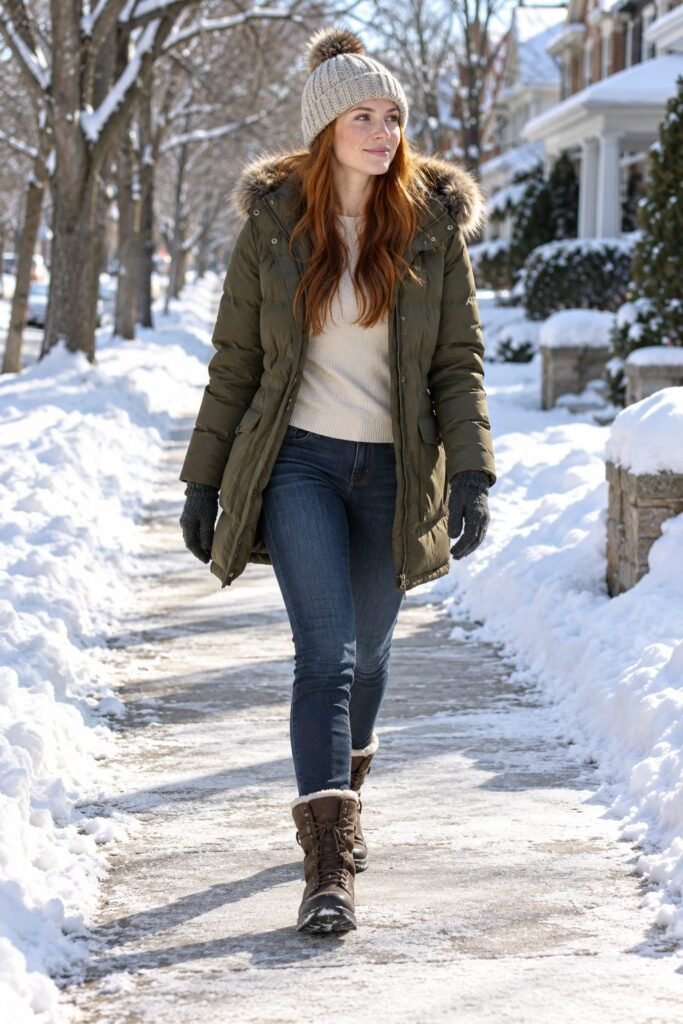
Why it works: Fleece-lined jeans look like regular denim but feel much warmer, and a hood gives you backup when the wind picks up.
Wear it with: a cream thermal top, insulated waterproof boots, a knit beanie and gloves. Wear it for: errands, walking the dog or a casual day out.
If it’s snowing: Pull the hood up and tuck your jeans into your boots.
11. Tailored down coat, wool trousers and a shoe swap

Why it works: A belted down coat is warm enough for the commute but looks neat when you arrive. Thin thermal leggings can go under your trousers.
Wear it with: charcoal wool trousers, waterproof commute boots and a large tote with pointed flats inside. Wear it for: a cold commute to the office.
If it’s icy: Choose boots with deep tread, and change into your flats at your desk.
12. Shearling coat, wool dress and lined tall boots

Why it works: A wool dress is warmer than most party fabrics, and fleece-lined tights make a dress realistic in freezing weather.
Wear it with: a rust wool midi dress, black fleece-lined tights, lined tall boots and gold earrings. Wear it for: dinner out or a winter party.
If it’s snowing: Wear your boots to the door and bring dressier shoes to change into.
Below 20°F (below −7°C): Bitter cold
What it feels like: painful on exposed skin, even during short trips. Choose warmth first and keep time outside short.
The formula: a thermal base, warm mid-layers, a long windproof coat, insulated boots, and as little exposed skin as possible.
A quick safety note: These are everyday outfit ideas, not protective gear for dangerous cold. Check your local forecast and wind chill before you go out. For long periods outdoors or extreme cold, follow National Weather Service cold weather safety guidance.
13. Long windproof parka, snow pants and mittens
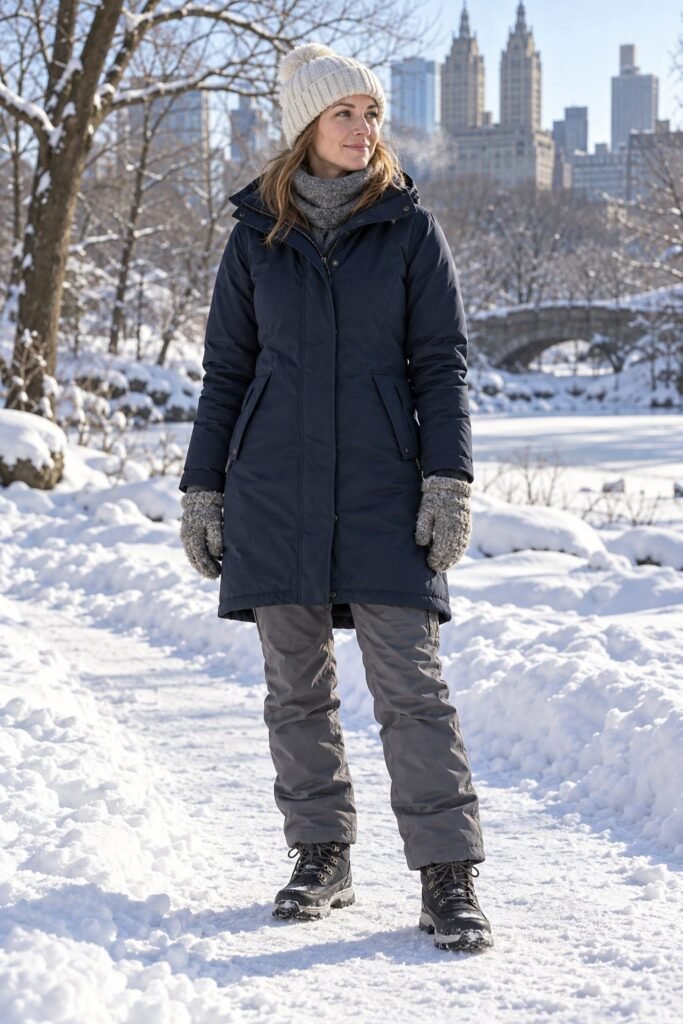
Why it works: A long coat protects your legs from the wind, and mittens are warmer than gloves because your fingers share heat.
Wear it with: a cream knit hat, insulated snow pants, a neck gaiter, mittens and insulated snow boots. Wear it for: a snowy walk or time at the park, kept short.
If it’s windy: Put your hood up and pull the gaiter over your nose and mouth.
14. Long down coat, fleece-lined trousers and a knit hood
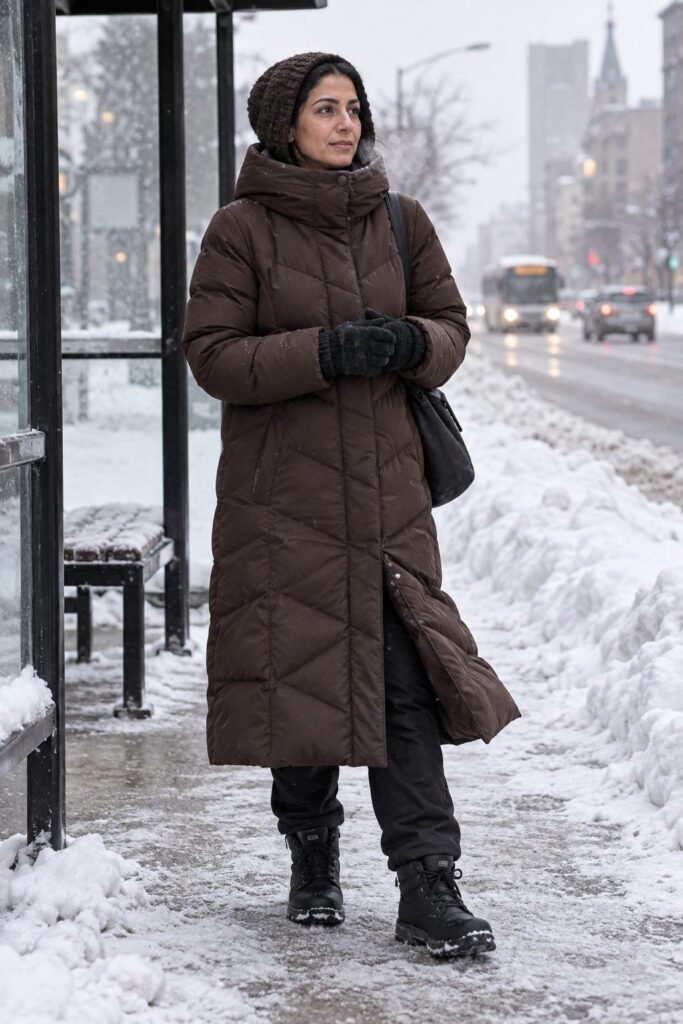
Why it works: A high collar and knit hood protect your neck and ears, which are easy to forget on a cold commute.
Wear it with: fleece-lined black trousers, insulated boots and thick gloves. Wear it for: a commute, a bus stop or essential errands.
If it’s wet or snowing: Check that your boots are waterproof and keep a spare pair of socks in your bag.
How to change your outfit for rain, wind and snow
You don’t need a whole new outfit when the weather turns. Often it’s one or two pieces that make the difference.
15. Cold rain: Hooded raincoat, wool sweater and rain boots
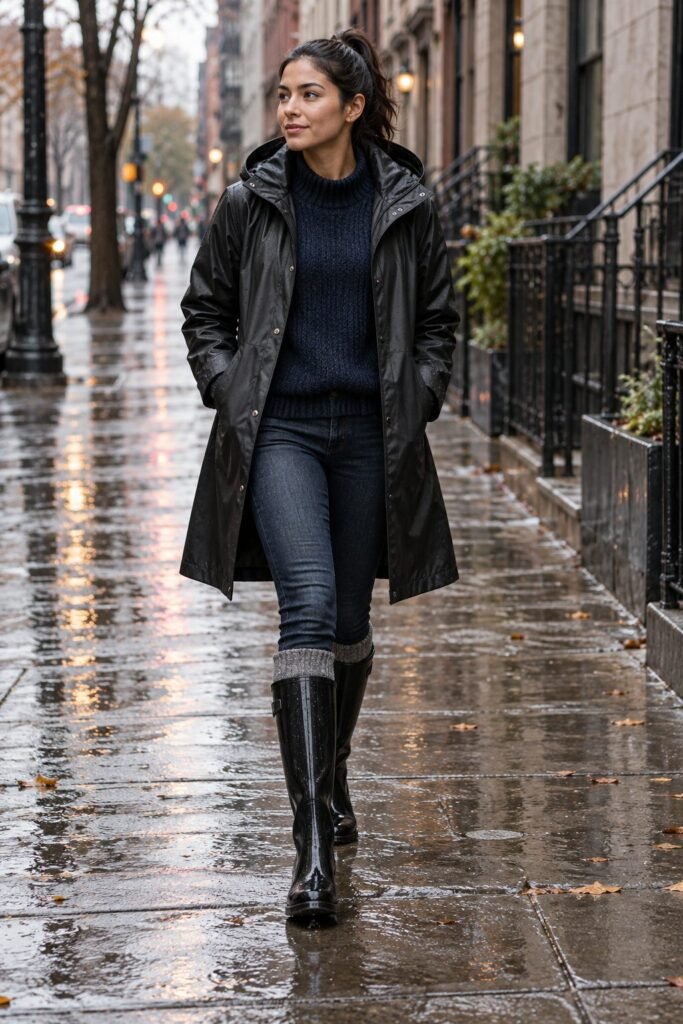
Why it works: Wool keeps its warmth better than cotton in damp weather, and a waterproof hood means you don’t need an umbrella.
Wear it with: a navy wool sweater, dark jeans, tall rain boots and wool socks. Wear it for: rainy days in the 40s.
The swap: Trade your regular coat for a waterproof one, and any suede shoes for rubber boots.
16. Wind: Windproof shell, fleece and a wool scarf
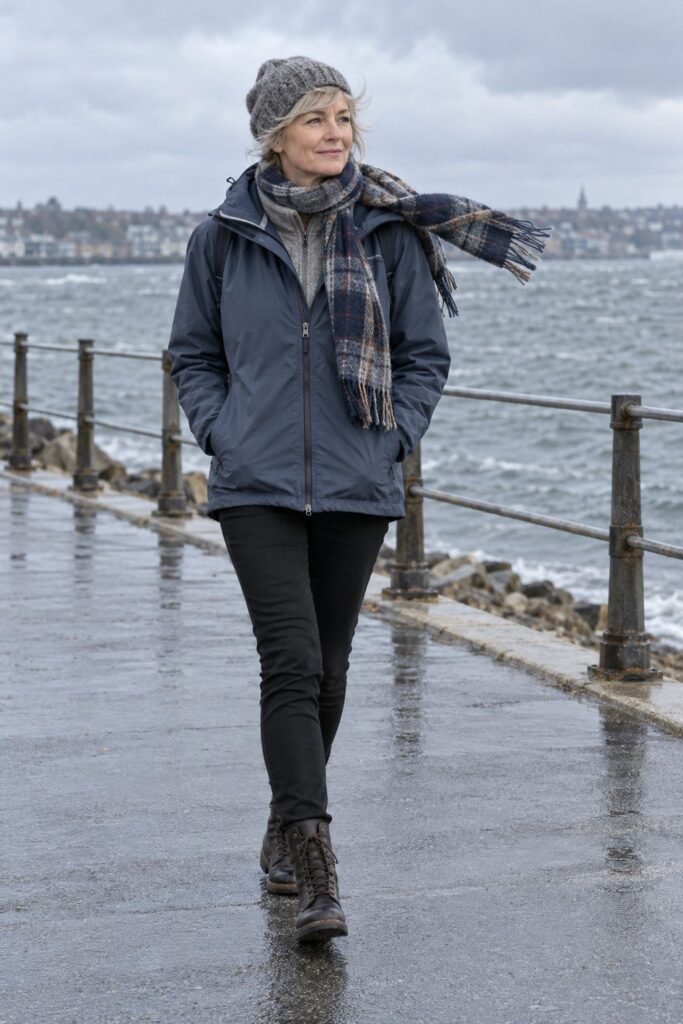
Why it works: A shell stops wind from reaching the warm fleece underneath, so you don’t need extra bulk.
Wear it with: a gray fleece, slim black pants, a plaid wool scarf, a knit hat and lace-up leather boots. Wear it for: windy days in the 30s, or anywhere near the water.
The swap: Close up loose layers, then add a high collar or scarf and a hat that stays on.
17. Snow: Waterproof shell, chunky knit and traction boots
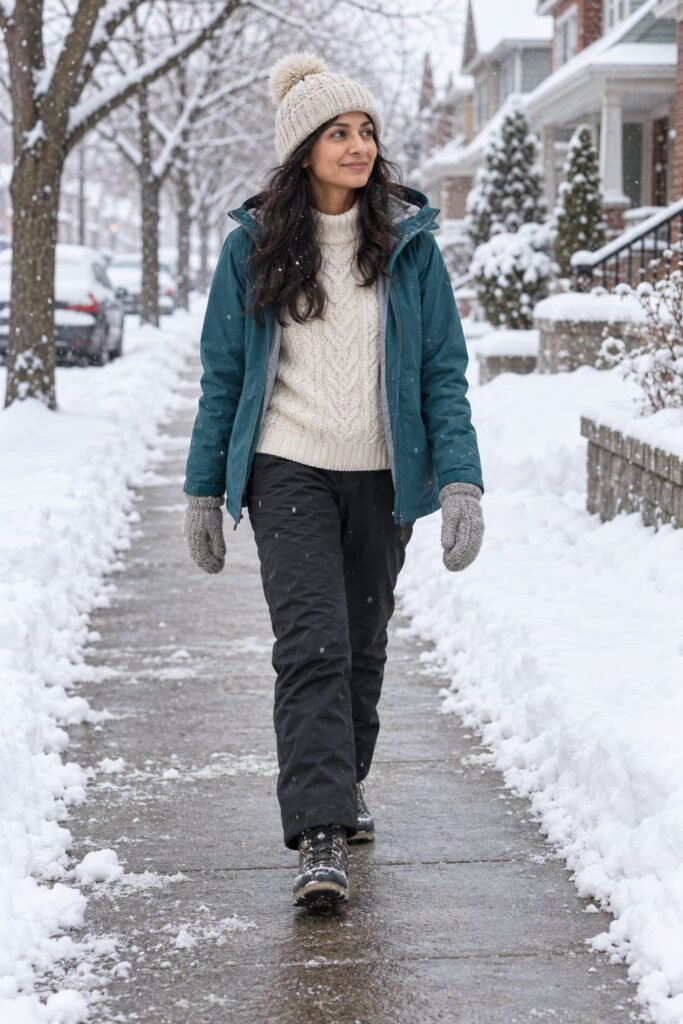
Why it works: Snow makes wet feet the biggest problem, so waterproof boots with good tread come first.
Wear it with: a chunky cream knit, lined snow pants, a knit hat, mittens and traction winter boots. Wear it for: snow days and clearing the driveway.
The swap: Choose waterproof fabrics over wool or suede on the outside, since melting snow soaks in.
A quick guide to warm fabrics
| Fabric | Best for | Good to know |
|---|---|---|
| Merino wool | Thin base layers and sweaters | Warm without bulk |
| Wool | Coats, trousers and dresses | A classic choice for cold, dry days |
| Down | Coats in freezing weather | Very warm for its weight; choose a water-resistant shell for wet days |
| Fleece | Mid-layers, lined jeans and tights | Soft and warm, but wind passes through it without a shell |
| Cotton | Mild, dry days | Slow to dry, so not the best choice for wet, cold days |
Cold weather outfit FAQs
What should I wear in 50-degree weather?
Try a light top with a trench, shacket or light jacket, plus full-length pants and closed shoes. Choose something you can take off easily, since 50-degree days often warm up by afternoon.
What should I wear in 40-degree weather?
Wear a warm base with a quilted jacket or lined coat, plus closed shoes. Keep a scarf nearby. If it’s rainy, switch to a waterproof coat and boots.
What should I wear in 30-degree weather?
Wear two or three layers, including a warm coat, boots, and a hat or gloves. This is close to freezing, so choose shoes with good grip in case sidewalks are icy.
What should I wear when it’s below freezing?
Start with a thermal base, add a warm middle layer, and finish with an insulated coat, waterproof boots, a hat and gloves. Below 20°F, cover as much skin as you can and limit your time outside.
How do I stay warm without looking bulky?
Use thin warm layers, like merino or a thermal top, under one great coat. Keep the bulkiest piece on the outside, and let a belt or tailored shape give your outfit structure.
Final tips
- Check both the temperature and the “feels like” number before you get dressed.
- Choose your shoes based on the sidewalk, not only the outfit. You can always change at the door.
- Add one layer for long waits or standing outside, and remove one if you’ll be walking fast.
Which temperature is the hardest to dress for where you live? Save this guide to your Pinterest board so it’s ready on cold mornings. For more ideas, see our winter work outfits and sweater dress outfits for winter.
More ideas
More ideas: What to Wear in 40 Degree Weather and Casual Winter Outfits for Women Over 50.
You May Also Like
 What to Wear Today: Free Outfit Finder by Temperature, Age and Occasion
 Snow Outfits for Women: Warm, Cute Looks for Snow Days
 Sports Mom Outfits: What to Wear to Basketball, Cheer and Hockey Games
 How to Dress Over 50 Without Looking Frumpy: 12 Easy Style Updates
 Coats That Layer Over Knit Dresses: 10 Styles for Women Over 50
 Non-Slip Winter Boots for Women Over 50 That Still Look Polished